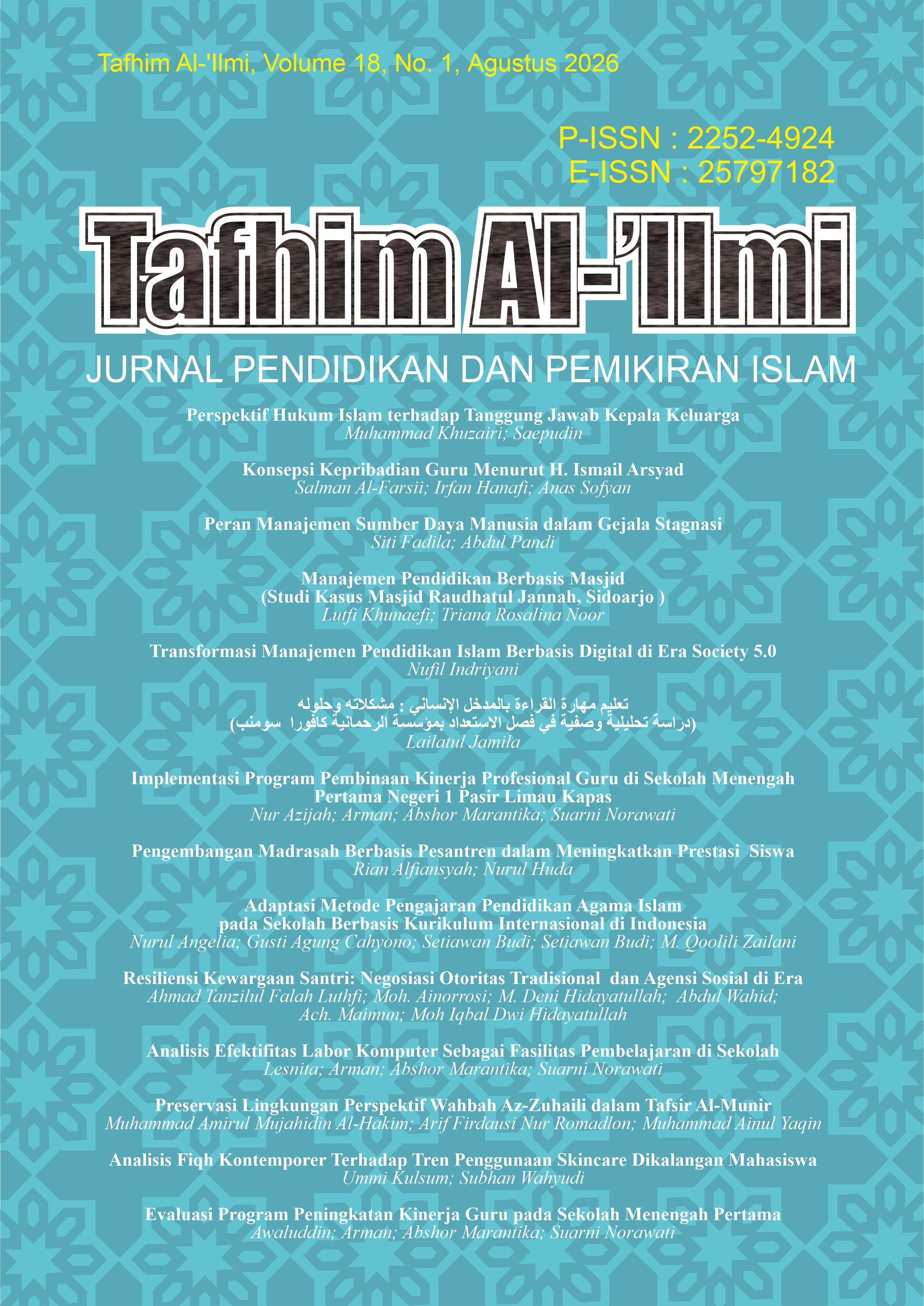
Preservasi Lingkungan Perspektif Wahbah az-Zuhaili dalam Tafsir Al-Munir
DOI:
https://doi.org/10.37459/tafhim.v18i01.627Abstract
Amid growing global attention to sustainability, the ecological crisis has emerged as one of the most urgent challenges facing humanity. This crisis—characterized by environmental degradation, natural resource exploitation, and increasing pollution—reflects a deeper moral and spiritual breakdown in the relationship between humans and nature, highlighting the need for a theological foundation to understand human responsibility toward the environment. This study examines Wahbah az-Zuhaili’s interpretation of Qur’anic verses on environmental preservation in Tafsir Al-Munir and formulates the principles of Islamic environmental ethics derived from them. Using a qualitative library research approach, the primary source is Tafsir Al-Munir, supported by relevant books, journal articles, and other scholarly works. Data were collected through documentation and analyzed systematically and inductively using a thematic (maudhui) exegesis approach combined with a scholar-based analytical framework proposed by Abdul Mustaqim. The findings show that az-Zuhaili interprets eight Qur’anic verses related to environmental preservation: QS. Al-An‘am: 38 and 165; QS. Al-A‘raf: 31 and 56; QS. Al-Ahzab: 72; QS. Ar-Rum: 41; QS. Al-Isra’: 26; and QS. Al-Baqarah: 261. From these interpretations, seven principles are identified: treating nature as a fellow creation within the order of life; avoiding excessive environmental destruction; upholding divine trust through obedience to God’s commands; fostering environmental awareness through productive action; understanding environmental damage as a result of human misconduct; exercising stewardship (khilafah) oriented toward prosperity rather than domination; and practicing restraint in the use of natural resources.
Downloads
Published
How to Cite
Issue
Section
License
Copyright (c) 2026 Tafhim Al-'Ilmi

This work is licensed under a Creative Commons Attribution-ShareAlike 4.0 International License.
Artikel yang dimuat dalam jurnal ini boleh disebarluaskan, diterbitkan kembali, dengan syarat mencantumkan bahwa artikel tesebut telah dimuat di jurnal Tafhim al-'Ilmi dengan mencantumkan volume, nomor, dan halaman artikel terkait.